Huggle vs Gemini: The Best Gemini Alternative for Everyday Work
Huggle is the best Gemini alternative when you want a finished, editable file and access to every frontier model rather than one vendor's. Gemini is Google's assistant, free with a Google Account and expanded through Google AI Plus, Pro, and Ultra plans that bundle higher limits with storage, Flow, Notebook, and Gemini in Gmail and Docs. Huggle routes each request across frontier models and delivers an editable document, deck, spreadsheet, LaTeX paper, database, or website, free with no card and from $10 per month.
By Huggle Editorial, updated . Gemini pricing and features verified against official sources. Where Gemini is the better tool, this page says so.
01At a glance
Huggle vs Gemini at a glance
The short version. The "Edge" column names which product is stronger for that criterion, or says so when it depends on the job.
Huggle from
$10/mo
Flash plan, launch price ($25/month list). Free plan needs no card.
Gemini from
$4.99/mo
Google AI Plus, 2x the usage limits of Free; 200 Flow credits.
12 criteria compared
5 Huggle · 2 Gemini
- Huggle leads
- 5
- Comparable or depends
- 5
- Gemini leads
- 2
Verified
4 official sources, linked in the ledger.
| Criterion | Huggle | Gemini | Edge |
|---|---|---|---|
| Best for | People who need a finished, editable document, deck, sheet, paper, database, or site | People who want an assistant inside Google apps and value the storage and media bundle | Depends on the job |
| Core output | Editable artifacts in a workspace: documents, decks, spreadsheets, LaTeX, databases, websites, apps, images, and video | Chat answers, Canvas drafts, Deep Research reports, images and video, and edits inside Gmail, Docs, and Vids | Huggle |
| Model access | Every frontier model across labs; choose Flash or Max and Huggle routes the request | Google's Flash and Pro models; Deep Think on Ultra | Huggle |
| Google apps integration | Google Workspace connector for agents and automations | Gemini in Gmail, Docs, Vids, Chrome, and Search on paid plans | Gemini |
| Free plan | Free allowance, no card required | Free with a Google Account: Flash model, Deep Research, image generation, Live, Canvas, Gems | Comparable |
| Entry paid price | Flash $10/month launch price ($25 list); Starter $20/month | Google AI Plus $4.99/month; Google AI Pro $19.99/month | Gemini |
| Bundled extras | None; the price buys the workspace and model access | 400 GB to 20 TB of storage, Flow credits, YouTube Premium, Google Home Premium by tier | Gemini |
| Editing after generation | Every artifact stays editable in the workspace | Refine in chat or Canvas, or export to Docs and edit there | Huggle |
02Two different bets
Gemini sells breadth of capability. Huggle sells the finished file.
Both products put frontier models to work. They disagree about what should come out the other end, and that shapes everything from pricing to how you edit.
What is Gemini?
Google describes Gemini as "your personal, proactive and powerful AI Assistant," sold through Google AI Plus, Pro, and Ultra plans.
Gemini is Google's AI assistant. The free Gemini app, included with a Google Account, offers access to Google's Flash model with varying access to its Pro model, image generation and editing, Deep Research, Gemini Live voice conversations, Canvas for drafting and code, and Gems, plus limited access to Google Flow and Gemini Notebook and 15 GB of storage. Paid Google AI plans raise the limits and bundle Google products: Plus adds video generation, Daily Brief, 200 Flow credits, Gemini in Gmail and Vids, and 400 GB of storage; Pro adds 4x Free limits, 1,000 Flow credits, Gemini in Docs, the Jules coding agent, Antigravity, Google Home Premium, YouTube Premium Lite, and 5 TB; Ultra, from $99.99 per month, adds up to 20x Pro limits, Deep Think, Gemini Spark, Project Genie, YouTube Premium, and storage from 20 TB.
Gemini is best for
- People who live in Gmail, Docs, Drive, and Chrome and want an assistant inside those apps
- Households and individuals who value the bundle: cloud storage, YouTube Premium, and Google Home alongside AI
- Creators using Flow for video, Nano Banana for images, and Notebook for research and audio overviews
- Anyone who wants a capable free assistant with Deep Research and image generation at no cost
Strengths
- A strong free tier with a Google Account: Flash model access, Deep Research, image generation and editing, Gemini Live, Canvas, and Gems
- Deep integration with Google apps: Gemini in Gmail, Docs, and Vids on paid plans, Chrome early access, and Deep Search in Google Search
- Plans bundle real non-AI value: 400 GB to 20 TB of storage, YouTube Premium Lite or Premium, Google Home Premium, and Flow credits for video
- Creative and research tooling in one subscription: Flow, Nano Banana, Notebook with Audio Overviews, and the Jules coding agent on Pro and Ultra
- Wide availability: Google states Plus is available in more than 160 countries and Pro and Ultra in more than 150
Limitations
- One vendor's models only. Every plan is Google's Flash and Pro family, with Deep Think reserved for Ultra
- The output is a chat response, a Canvas draft, or an edit inside a Google app; there is no workspace that turns a brief into an editable deck, spreadsheet, LaTeX paper, or database as a first-class artifact
- Higher limits are sold as bundles. Getting more Gemini means also paying for storage, YouTube, and Home features you may not use, and Ultra runs $99.99 to $199.99 per month
- Plan contents, availability, and pricing vary by country, and Google's plan pages describe limits as multiples of Free or Pro rather than published quotas
What is Huggle?
The AI workspace for everyday work. Artifacts over chat.
Huggle is the AI workspace for everyday work. You describe the outcome once and Huggle researches, drafts, and delivers a finished, editable artifact: a document, slide deck, spreadsheet, LaTeX paper, database, image, video, or a live website. Instead of choosing a model vendor you choose a capability tier, Flash for speed or Max for power, and Huggle routes across frontier models behind the scenes. Agents and scheduled automations handle recurring work through connectors such as GitHub, Linear, and Google Workspace.
Huggle is best for
- Students who need essays, homework documents, decks, and study material they can hand in
- Researchers and academics who need LaTeX papers, literature summaries, figures, and data tables that compile
- Consultants and freelancers producing client decks, proposals, reports, and trackers
- Marketers and creators who need landing pages, campaign assets, images, and video
- Small teams and operators who want recurring work to run on autopilot through agents and scheduled automations
Strengths
- Artifacts over chat: every request ends as a real file you can present, publish, or export, not a transcript to copy elsewhere
- Every frontier model under one subscription, routed by capability tier so you never pick a vendor per task
- Editing is part of the workflow: revise the structure, content, and layout of the artifact in place instead of re-running the whole job
- Predictable pricing with a free plan that needs no card, a $10/month launch tier, and dollar-denominated included credits on paid plans
- A public template library and free AI tools so you can see the finished output before you sign up
- Built for academic work: LaTeX that compiles, citation generators, thesis and lab-report templates
Limitations
- Huggle is a workspace first, not a general-purpose autonomous agent; it will not place phone calls or operate arbitrary third-party websites on your behalf
- Media generation covers images, video, and voice, but Huggle does not try to bundle dozens of named image and video models
- Huggle does not publish a per-seat team plan with SSO today
Artifacts Huggle produces
- 01Documents, essays, and reports
- 02Slide decks and presentations
- 03Spreadsheets with real formulas and formatting
- 04LaTeX papers that compile, with figures, tables, and bibliographies
- 05Databases and structured trackers
- 06Live websites and small apps deployed to a URL
- 07Images, video, and voice
03Feature by feature
Huggle vs Gemini: feature comparison
Criterion by criterion. Gemini details reflect its official pricing and help pages as of September 16, 2026.
- Huggle leads
- 5
- Comparable or depends
- 5
- Gemini leads
- 2
| Criterion | Huggle | Gemini | Edge |
|---|---|---|---|
| Product shape | A workspace organized around the artifact you need to hand in: research, generation, editing, and delivery in one place. | An assistant woven through Google's products: the Gemini app plus Gemini inside Gmail, Docs, Chrome, and Search. | Depends on the job |
| Documents and reports | Structured documents you edit section by section and export; proposal, report, and business-plan templates are public. | Drafts in Canvas or directly in Google Docs with Gemini on paid plans. | Comparable |
| Slides | Editable decks with a narrative arc and charts built from your numbers. | Drafting help in chat; slide creation lives in Google Slides and Vids rather than the Gemini app. | Huggle |
| Spreadsheets | Workbooks with live formulas, assumptions, and scenarios that stay editable in the workspace. | Formula and analysis help in chat; the spreadsheet itself is a Google Sheets file. | Huggle |
| LaTeX and academic work | LaTeX papers, theses, and lab reports that compile in the workspace, plus free citation and BibTeX generators. | Deep Research and Notebook with Audio Overviews for research; LaTeX source in chat without a compiled project. | Huggle |
| Websites and apps | Responsive sites and small apps built, edited in place, and published to a live URL. | Canvas previews code; Jules and Antigravity on Pro and Ultra target software developers. | Huggle |
| Research | Research is the first step of every artifact: gather sources, then draft the document, deck, or paper. | Deep Research on every plan and Deep Search in Google Search on paid plans, returning a written report. | Gemini |
| Images and video | Images, video, and voice generated in the same workspace. | Image generation on Free, video generation from Plus, and Google Flow with credits by tier. | Gemini |
| Model choice | Every frontier model on every paid plan; pick a capability tier, not a vendor. | Google's models only; more Pro access and Deep Think as you move up the tiers. | Huggle |
| Agents and automation | Agents and scheduled automations with connectors to GitHub, Linear, and Google Workspace. | Gemini Spark personal agent on Ultra in select countries; Daily Brief on paid plans; Jules for code. | Depends on the job |
| Pricing model | Fixed monthly price with a dollar-denominated allowance; overage continues through wallet credits. | Bundled subscriptions from $4.99 to $199.99 per month; limits described as multiples of the tier below. | Depends on the job |
| Try before you pay | Free plan with no card, a public template gallery, and free AI tools that run without an account. | Free Gemini app with a Google Account, including Deep Research and image generation. | Comparable |
04Pricing
Huggle vs Gemini pricing
Published list prices in USD. Huggle prices come from its published pricing sheet (huggle.ai/pricing.md); Gemini prices come from its official pricing pages, linked in the sources below.
Huggle plans
5 tiers- Every paid plan includes every frontier model; you pick a Flash or Max capability tier per request instead of a vendor.
- Each paid plan includes a monthly credit allowance in dollars. Usage beyond it continues through wallet credits rather than stopping your work.
- Annual billing is charged at the price of ten months, so every plan is effectively two months free on annual.
- The free account has a real allowance and asks for no card, so you can generate a finished document or deck before deciding.
Gemini plans
4 tiers- Plans are sold as Google AI subscriptions that bundle Gemini limits with storage, Google app features, Flow credits, and in some tiers YouTube Premium and Google Home Premium. Prices shown are US list prices from Google's plan pages.
- Google states usage limits as multiples: Plus is 2x Free, Pro is 4x Free, and Ultra is 5x or 20x Pro depending on the $99.99 or $199.99 tier.
- Availability and plan contents vary by country: Plus in more than 160 countries and territories, Pro and Ultra in more than 150, YouTube Premium in the Ultra plan in more than 40.
- Business and education access to Gemini is sold through Google Workspace and is not covered on this page.
05The verdict
Should you choose Huggle or Gemini?
Neither answer is wrong. Match the tool to the shape of the work you do most weeks.
Choose Huggle if
4 signals- You want the finished, editable deck, spreadsheet, paper, database, or website rather than a chat answer or a Docs draft
- You want every frontier model and would rather choose a capability tier than commit to Google's lineup
- Your work is academic or analytical: LaTeX that compiles, citations, spreadsheets with working formulas
- You want to pay for a work tool, not a bundle of storage, YouTube, and smart-home features
Stay with Gemini if
4 signals- You do most of your work inside Gmail, Docs, Drive, and Chrome and want the assistant there
- You want the bundle: cloud storage, YouTube Premium, Google Home Premium, and Flow video credits alongside AI
- Deep Research, Notebook Audio Overviews, and Google's image and video models are your main use
- You want the lowest-priced paid tier at $4.99 and are happy with Google's models
06The long read
Huggle vs Gemini, in depth
- 01What is Gemini?
- 02What is Huggle?
- 03Gemini pricing vs Huggle pricing
- 04Where Gemini is the better choice
- 05Where Huggle is the better choice
What is Gemini?
Gemini is Google's assistant, and for most people it is already installed: the free Gemini app comes with a Google Account and includes Google's Flash model, varying access to its Pro model, image generation and editing, Deep Research, Gemini Live, Canvas, and Gems. The paid Google AI plans, Plus at $4.99, Pro at $19.99, and Ultra from $99.99 per month, multiply the usage limits and bundle Google products around them: Gemini in Gmail, Docs, and Vids, Flow credits for video, Notebook, the Jules coding agent, cloud storage from 400 GB to 20 TB, and in the upper tiers YouTube Premium and Google Home Premium.
Gemini's advantage is reach. It is inside the apps many people already use, its free tier is generous, and the bundles are good value if you want the storage and media. The constraint is the same one every single-vendor assistant has: the models are Google's, and the outputs are chat answers, Canvas drafts, or edits to a Google file rather than finished artifacts in a workspace built for deliverables.
What is Huggle?
Huggle is the AI workspace for everyday work, and its organizing idea is artifacts over chat. Instead of an answer you copy into a Google Doc, Huggle hands back the deliverable itself: a document, a slide deck, a spreadsheet with live formulas, a LaTeX paper that compiles, a database, an image or video, or a website deployed to a URL. Everything opens as an editable artifact in the workspace, so a headline, a formula, or a bibliography entry is changed where it lives rather than re-prompted.
Every paid Huggle plan includes every frontier model, and each request is routed by a Flash or Max capability tier rather than a model menu, so you are never choosing between Google's lineup and someone else's. Agents and scheduled automations keep recurring work moving through connectors such as GitHub, Linear, and Google Workspace. Pricing is a fixed monthly fee with a dollar-denominated allowance on paid plans, and the free plan needs no card.
Gemini pricing vs Huggle pricing
Gemini is free with a Google Account. Google AI Plus is $4.99 per month for 2x the free limits, video generation, Gemini in Gmail, and 400 GB of storage. Google AI Pro is $19.99 per month for 4x the free limits, Gemini in Docs, Jules, 1,000 Flow credits, YouTube Premium Lite, Google Home Premium, and 5 TB. Google AI Ultra is $99.99 per month for 5x Pro limits or $199.99 for 20x, with Deep Think, Gemini Spark, Project Genie, YouTube Premium, and storage from 20 TB. Prices are US list prices, and Google notes availability varies by country.
Huggle is free with no card. Flash is $10 per month at launch ($25 list), Starter is $20 with $35 of included credits, Pro is $40 with $60, and Ultra is $100 with $120, with annual billing at the price of ten months and every frontier model on every paid plan. Google AI Plus is the cheapest paid assistant here, and Google AI Pro and Huggle Starter are priced within a dollar of each other. The question is whether you want the extra $20 to buy storage and YouTube or a workspace that turns the request into an editable deliverable using whichever lab's model is best for it.
Where Gemini is the better choice
Gemini is the better choice if your work already lives in Google's apps. Gemini in Gmail, Docs, and Vids, Chrome early access, and Deep Search in Google Search put the assistant where you are without switching tools. The free tier's Deep Research and image generation are hard to beat at $0. If you would buy Google One storage or YouTube Premium anyway, the Pro and Ultra bundles effectively discount the AI, and Flow, Notebook, and Gemini's image and video models are strong for creators. Ultra's Deep Think and Gemini Spark are for people who specifically want the most of Google's models.
Where Huggle is the better choice
Huggle is the better choice when the job ends in a file you have to hand in. The deck with charts from your numbers, the spreadsheet with working formulas, the compiled LaTeX paper, the database, and the live website are first-class, editable artifacts, not chat answers to paste into Docs. Model routing across labs means you are never locked to one vendor's roadmap. Paid plans buy the work tool alone rather than a bundle, and the free plan carries a recurring allowance with no card. For students, consultants, operators, and researchers, that is the shorter path from brief to deliverable.
07In practice
Where Huggle replaces Gemini
Four everyday jobs, each with the public templates and free tools you can try before creating an account. The stills are real template output.
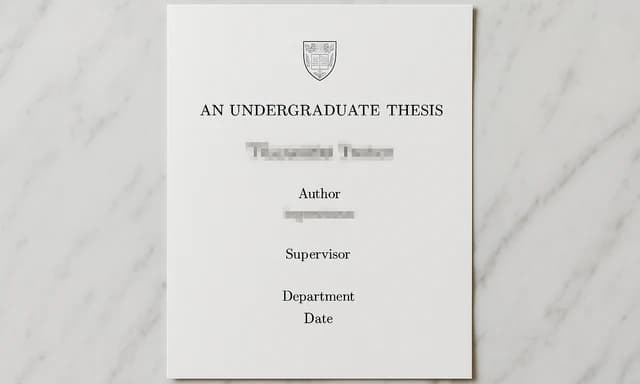 Compiled LaTeX thesis
Students
01the paper, not the chat
Turn research notes into a LaTeX thesis or lab report that compiles, with citations from the free generators.
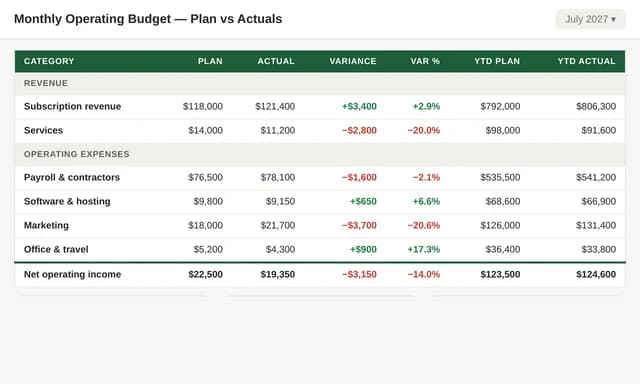 Working spreadsheet
Operators
02budget and board deck from one brief
Build the operating budget with live formulas and the board update deck that reports on it.
 Presentation deck
Sales and marketing
03deck, case study, and calculator
Generate the sales deck, the customer case study, and an ROI calculator site that publishes to a URL.
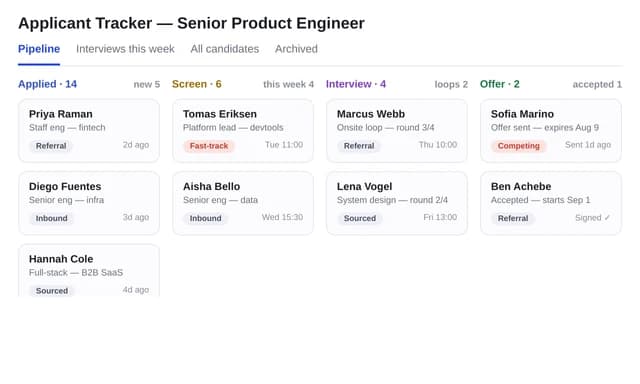 Hiring database
Recruiters and PMs
04trackers as databases
Stand up an applicant tracker or content calendar with typed fields, relations, and views, then share it.
08Making the move
Switching from Gemini to Huggle
Five steps, and nothing you generated elsewhere is lost. Most people run one real week of work on the free plan before touching a paid subscription.
- 1
Gather the Docs, Sheets, and Deep Research reports you rely on; exported files and pasted text work as source material in Huggle.
- 2
Create a free Huggle account (no card) and describe the deliverable you would normally draft with Gemini and finish in a Google app.
- 3
Choose Flash for quick work or Max for the hardest problems; Huggle routes across frontier models without a model picker.
- 4
Open the result as an editable document, deck, spreadsheet, LaTeX project, database, or website and change it in place.
- 5
Keep the free Gemini app for Gmail and Search; decide on a Google AI plan only if you want the storage and media bundle.
09FAQ
Huggle vs Gemini: frequently asked questions
Straight answers to the questions people type into search and into AI assistants. Prices are the ones verified on September 16, 2026.
01What is the best alternative to Google Gemini?
If your work lives in Gmail and Docs, Gemini is hard to replace there. If you want a finished, editable document, deck, spreadsheet, paper, database, or website, and access to every frontier model rather than Google's alone, Huggle is the alternative built for that, with a free plan and no card.
02Is Gemini free?
Yes. The Gemini app is free with a Google Account and includes Google's Flash model, varying access to the Pro model, image generation and editing, Deep Research, Gemini Live, Canvas, Gems, and 15 GB of storage. Huggle's free plan also needs no card and includes an allowance across every artifact type.
03How much does Gemini cost compared with Huggle?
Gemini: free; Google AI Plus $4.99 per month; Google AI Pro $19.99 per month; Google AI Ultra $99.99 per month, or $199.99 for 20x limits. Huggle: free; Flash $10 per month launch price ($25 list), Starter $20, Pro $40, Ultra $100, with annual billing at ten months. Gemini prices are US list prices; availability varies by country. Verified September 2026.
04What do you get with Google AI Pro?
Google lists 4x the free usage limits, video generation and Daily Brief, 1,000 Flow credits, Gemini in Gmail, Docs, and Vids, the Jules coding agent, Antigravity entry limits, Notebook with more Audio Overviews, Google Home Premium (Standard), YouTube Premium Lite, Chrome early access, and 5 TB of storage.
05Does Huggle use Google's models?
Huggle routes across frontier models from multiple labs by capability tier. You choose Flash or Max for the request and Huggle selects the model, so you are not tied to one vendor and do not need a separate subscription per lab.
06Can Gemini make slides and spreadsheets?
Gemini helps draft and analyze in chat and Canvas, and on paid plans works inside Google Docs and Vids; the slide deck or spreadsheet itself lives in Google Slides or Sheets. In Huggle the deck and the spreadsheet with working formulas are first-class artifacts that stay editable in the workspace.
07Is Gemini or Huggle better for research?
Gemini's Deep Research and Notebook are strong for reading and summarizing, and Deep Research is available on the free plan. Huggle treats research as the first step toward a deliverable: it gathers sources and then drafts the paper, report, or deck as an editable artifact, with free citation and BibTeX tools for academic work.
08Can I switch from Gemini to Huggle without losing work?
Yes. Export or copy your Docs, Sheets, and research reports and use them as source material in Huggle, where the result opens as an editable artifact. The free plan lets you test the workflow before changing any Google AI subscription.
10Sources and methodology
Every claim on this page has a receipt
We compare published capabilities and list prices, not benchmarks or star ratings. Gemini facts were checked against the official pages below on September 16, 2026.
- 01Google AI Pro & Ultra plansGoogle Gemini · accessed
- 02Gemini – Your AI assistant from GoogleGoogle Gemini · accessed
- 03Google AI plansGoogle One · accessed
- 04Huggle pricingHuggle · accessed
Primary sources only
Gemini claims come from its own pricing, help center, and product pages. Nothing is paraphrased from round-ups.
Dated, re-verified
Every figure carries the date it was checked. When Gemini changes a price or a plan, the date moves with it.
We say when they win
2 of 12 criteria go to Gemini above. A comparison that never loses a row is an advertisement.
Huggle facts come from its published pricing sheet (huggle.ai/pricing.md) and the product itself. If something is out of date, use the contact link in the footer and we will correct it.
The Gemini alternative for finished work
Describe the work once. Edit the file the moment it lands.
Start free with no card. Documents, decks, spreadsheets, LaTeX, databases, and websites, every frontier model included, from $10 a month when you upgrade.